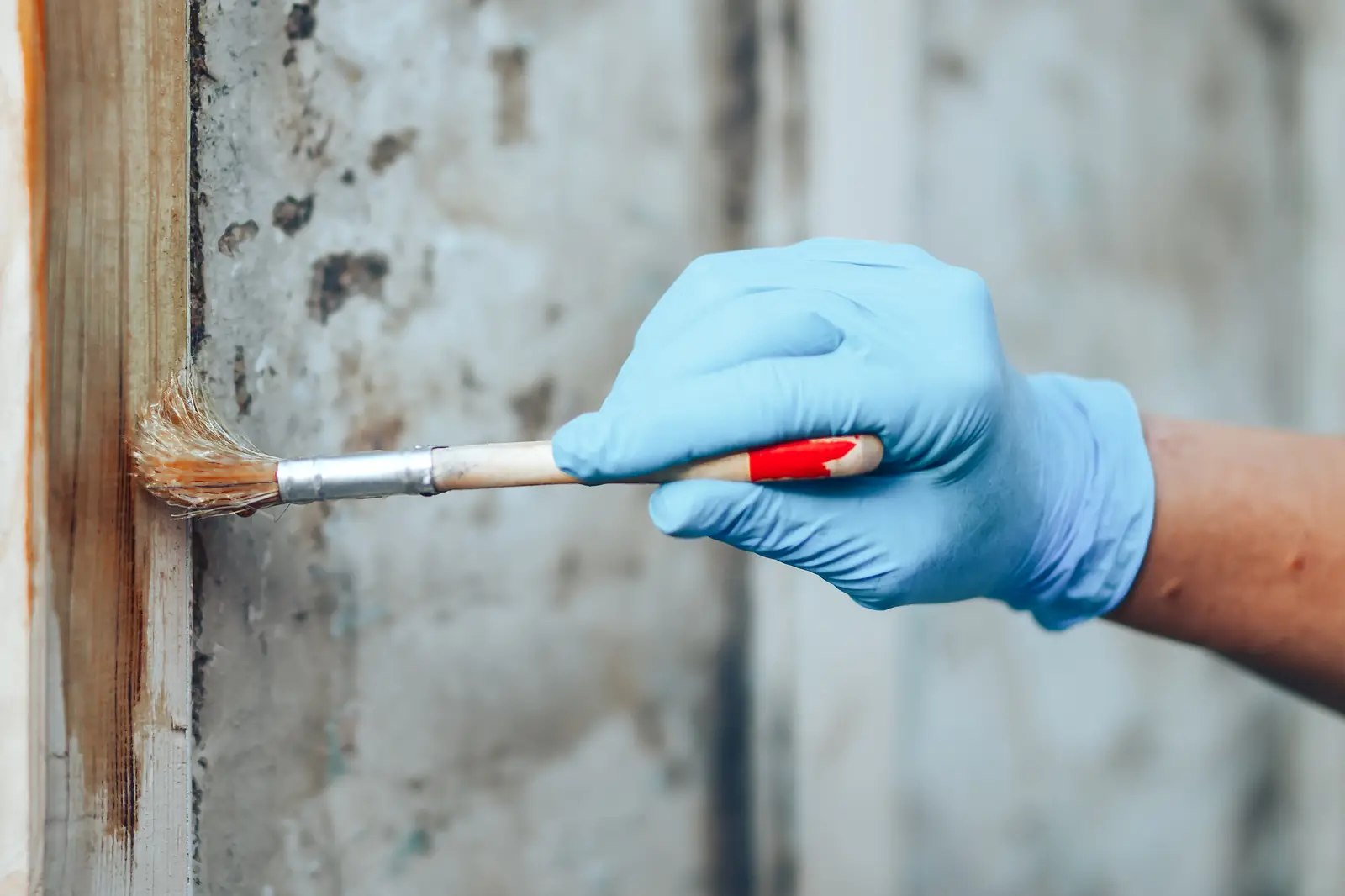
Old houses in central Massachusetts carry a lot of paint. A hundred-year-old window casing might have ten or fifteen coats on it, some oil, some latex, and at least one with lead in it. When that stack starts to peel, the instinct is to scrape the loose bits and paint over them. That works for a season. Fixing it for good starts with the reason it peeled.
Moisture is usually the cause
Most peeling on exterior wood comes from water getting behind the paint. When that water freezes, it pushes the paint off from underneath. Common sources:
- Gutters and downspouts that overflow or dump water against the siding.
- Open joints where caulk has failed at corner boards, window casings and sills.
- Ice dams that send meltwater down behind the trim at the eaves.
- Moisture from inside, such as bathrooms and kitchens with no exhaust fan, pushing out through the walls.
- Wood too close to the ground, soaking up water from soil and snow piles.
If peeling is worst in one area, look directly above it and directly behind it. The source is usually close by.
Paint that will not stick to paint
The other common cause is the coats themselves. Latex paint applied over old oil paint without proper prep can let go in sheets. So can paint over a chalky, dirty or glossy surface that was never cleaned or scuffed. In those cases the problem is adhesion, not water, and the fix is better prep and the right primer.
Lead paint changes the job
Houses built before 1978 may have lead paint in the older layers, and peeling paint is where it gets loose. Dry scraping and power sanding can spread lead dust around the house and yard. Federal and Massachusetts rules govern how paint can be disturbed in pre-1978 homes, especially where children live. Before anyone starts scraping, ask how lead will be handled.
How the fix usually goes
Stop the water
Fix the gutter, the flashing, the vent or the grading first. Paint cannot hold back water that is still getting in.
Remove what is loose
Scrape back to paint that is firmly bonded, and sand the edges so they do not show through the new coat.
Repair the wood
Soft, rotted wood gets repaired or replaced. Paint over rot fails quickly.
Prime, caulk and paint
Bare wood gets primer, joints get caulked, and two finish coats go on in good weather.
When it is more than paint
If the wood is soft when you press it, the peeling keeps coming back in the same place, or there is staining inside the wall behind it, the problem may need a carpenter or roofer before a painter. A good painter will say so at the estimate.
See how M's Fine Finishes repairs and paints trim, or call (978) 645-3529 to have someone look at yours.